Power Lunge
Power Lunge'ler bacak gücünü, patlayıcı gücü ve çevikliği artırmaya yardımcı olabilecek dinamik, yüksek yoğunluklu bir egzersizdir. Genellikle basketbol, futbol ve atletizm gibi sporlarda atletik performansı artırmayı amaçlayan antrenmanlara dahil edilirler. Ayrıca Power Lunge'lar, kardiyovasküler kondisyonunuzu ve alt vücut gücünü artırmak için HIIT (Yüksek Yoğunluklu Aralıklı Antrenman) antrenmanları da dahil olmak üzere çeşitli fitness rutinlerine dahil edilebilir.
Nasıl yapılır
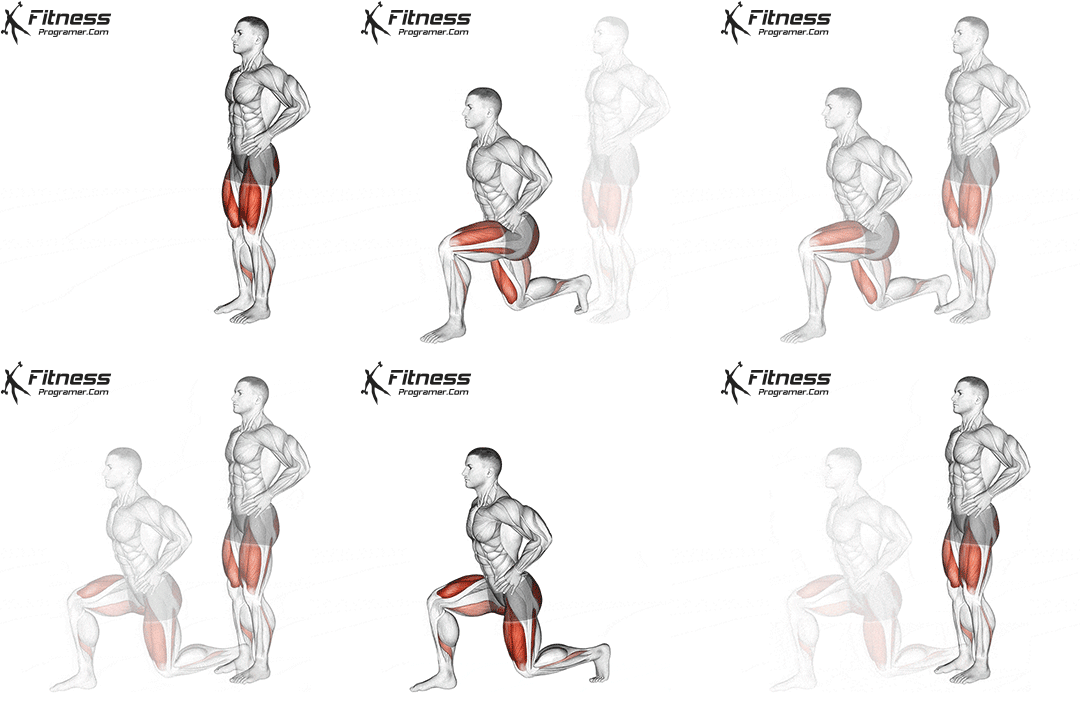
Başlangıç Konumu:
- Ayaklarınızı kalça genişliğinde açın.
- Denge için ellerinizi kalçalarınızın üzerinde veya yanlarınızda tutun.
Hamle Pozisyonu:
- Bir hamle oluşturmak için her iki dizinizi de bükün. pozisyonu.
- Sağ ayağınızla geriye doğru uzun bir adım atın.
- Sol diziniz 90 derecelik bir açıda olmalı ve uyluğunuz yere paralel olmalıdır.
- Çekirdek bölgenizi meşgul, göğsünüz yukarıda ve sırtınız düz olsun.
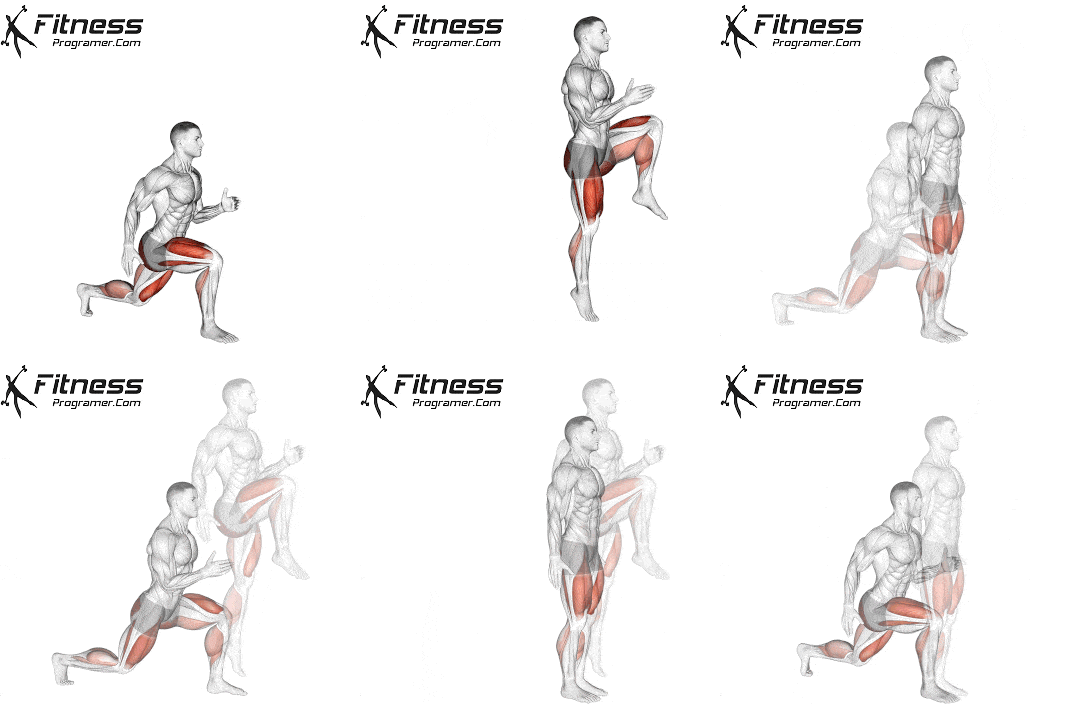
Sıçrama Aşaması:
- Alçaltılmış hamle pozisyonundan, sol bacağınızın gücünü kullanarak havaya doğru patlayın.
- Sıçarken, sağ dizinizi mümkün olduğu kadar yükseğe göğsünüze doğru kaldırın.
- Gerekirse denge ve ivme için kollarınızı kullanın.
İniş:
- Sol ayağınızla yumuşak bir şekilde yere inin ve başlangıç pozisyonuna dönün.
- Eklemler üzerindeki baskıyı azaltmak ve darbeyi absorbe etmek için sol dizinizi hafif bükerek indiğinizden emin olun.
Diğerinde Tekrarlayın. Bacak:
- İnişten hemen sonra bacaklarınızı değiştirin, böylece sağ ayağınız ileri, sol ayağınız arkanızda olsun.
- Aynı sırayı tekrarlayın: Aşağı hamle yapın, yukarı zıplayın ve sol dizinizi göğsünüze doğru getirin.
Tekrarlar ve Setler:
- Her bacakta belirli sayıda tekrar (ör. her bacakta 10) veya süre uygulayabilirsiniz. kondisyon seviyenize ve hedeflerinize göre kendinize (örneğin her bacakta 15 saniye) çalışın.
Power Lunge Çalışan Kaslar
Power Lunge'ler öncelikle kuadriseps, kalça kasları, diz arkası kirişleri ve baldırlar da dahil olmak üzere vücudun alt kısmındaki kasları hedefler. İşte Power Lunges sırasında çalıştırılan kasların dökümü:
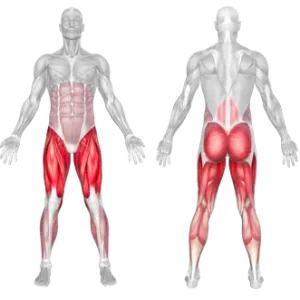
- Kuadriseps: Kuadriseps, uyluğunuzun ön kısmında bulunan kaslardır.. Sıçrama sırasında vücudunuzu hamle pozisyonuna indirdiğinizde ve yerden patlayıcı bir şekilde ittiğinizde yoğun bir şekilde devreye girerler.
- Arka kirişleri: Diz arkası kasları uyluğunuzun arkasındaki kaslardır. Power Lunge'ın hem alçalma aşamasında hem de patlayıcı sıçrama aşamasında yer alırlar.
- Gluteus Maximus: Kalça kasları, özellikle de gluteus maximus (en büyük kalça kası), atlama sırasında kendinizi yukarı doğru ittiğinizde ve hamle sırasında dik pozisyonu koruduğunuzda çalışır.
- Baldır Kasları: Gastroknemius ve soleus dahil baldır kasları, hareket ettiğinizde etkinleştirilir atlama sırasında ve yumuşak bir şekilde yere indiğinizde yeri itin.
- Kalça Fleksörleri: Atlama aşamasında dizinizi göğsünüze doğru kaldırdığınızda iliopsoas da dahil olmak üzere kalça fleksör kasları devreye girer.
- Temel Kaslar: Rektus abdominis (ön), oblikler (yanlar) ve transvers abdominis (derin merkez) dahil olmak üzere merkez kaslarınız tüm hareket boyunca denge ve stabilitenin korunmasında rol oynar. hareket.
- Addüktörler: Addüktörler olarak bilinen iç uyluk kasları, hamle sırasında uygun bacak hizasının korunmasında rol oynar.
- Erector Spinae: Alt sırttaki erektör spinae kasları, Power Lunges sırasında dik duruşu korumak için destek sağlar.
Power Lunges'ı egzersiz rutininize dahil ederek etkili bir şekilde şunları yapabilirsiniz: Bu kas gruplarını hedefleyin ve güçlendirin, alt vücut gücünüzü, patlayıcı gücünüzü ve genel atletik performansınızı artırın. Yaralanma riskini en aza indirirken egzersizin faydalarını en üst düzeye çıkarmak için uygun form ve tekniği kullanmayı unutmayın.
Power Lunge Çeşitleri
Antrenmanlarınızı özel ihtiyaçlarınıza göre uyarlamak için bunları çeşitli şekillerde özelleştirebilirsiniz. Bu varyasyonlar ters hamleleri, yan hamleleri, reveranslı hamleleri, sıçrayan hamleleri ve diğerlerini kapsar. Bu farklı formları entegre ederek yalnızca çeşitli kas gruplarını hedeflemekle kalmaz, aynı zamanda antrenmanlarınıza ilgi çekici çeşitlilik katarsınız.